All Resources

Grant specifics regarding available clean & safe drinking water programs and grants in Iowa including info like key dates and funds available.
Through the SWP, Iowa farmers and landowners may receive 75 percent financial assistance rates for key water quality practices located in source water protection priority areas. Click to find out more.
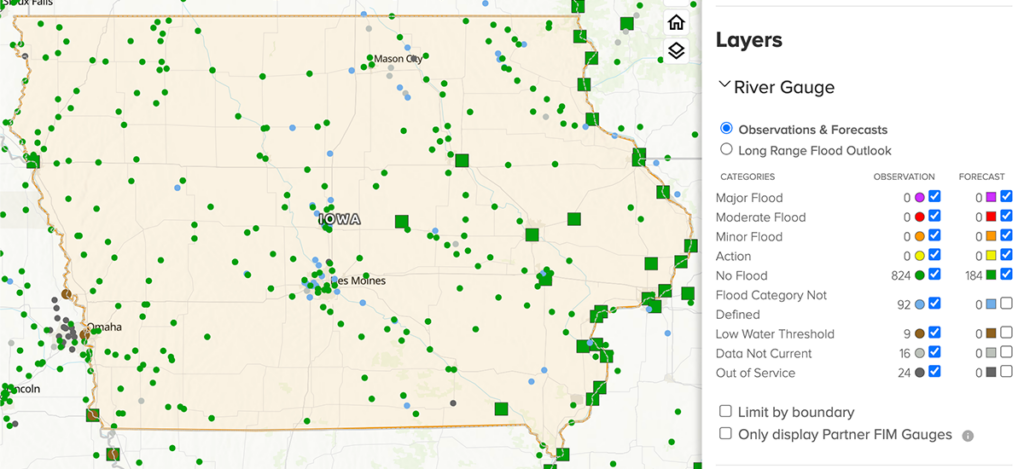
Use this data to make more informed decisions about risk to mitigate the dangers posed by floods and droughts.
Small communities with aerated lagoon and facultative-controlled discharge lagoon wastewater treatment systems face increasingly stringent requirements for ammonia, pH, dissolved oxygen, and bacteria with the National Pollution Discharge Elimination System (NPDES) Permits. 
Learn the challenges associated with wastewater treatment and solutions to address them in your municipality.
The mission of Iowa DNR's Public Drinking Water Program is to protect and enhance the public health, safety and quality of life for all persons by ensuring the public drinking water is safe to drink. 
The state's water quality standards help ensure that all Iowans have surface waters that are fishable and swimmable to the fullest extent practicable and water resources that are put to their best beneficial uses.
Drinking water protection programs at the state and national levels play a critical role in ensuring high-quality drinking water and in protecting the public's health. This data contains information about the levels of several contaminants that can be found in drinking water.
If you drink water out of a private water supply, you should test your water source at least once each year and anytime the well is serviced or the water changes in look, smell or taste. Iowa DNR's private well testing helps ensure the safety and quality of your private water supply.
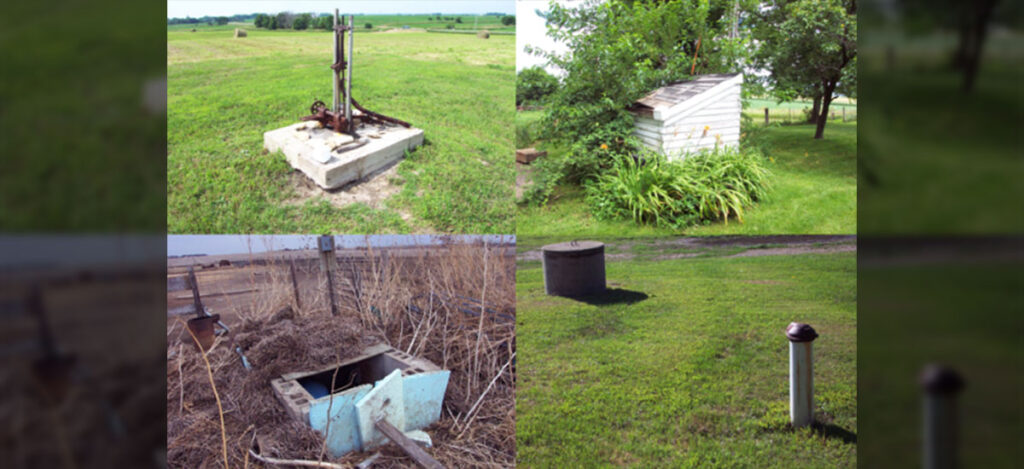
The Water Supply Section of the Environmental Protection Division of the Department of Natural Resources oversees the regulation of the construction and renovation of private wells and the plugging of abandoned wells by Certified Water Well Contractors in the State of Iowa.
Iowa's Grants-to-Counties (GTC) Water Well Program provides free water testing to private well owners. The Iowa DNR recommends that all private well owners have their water tested at least annually. To get your private well tested, please contact your local county health department.
The Stormwater Best Management Practices Loan Program offers low interest loans for projects to control stormwater runoff. The loans offer incentives for installing infiltration-based stormwater quality practices.
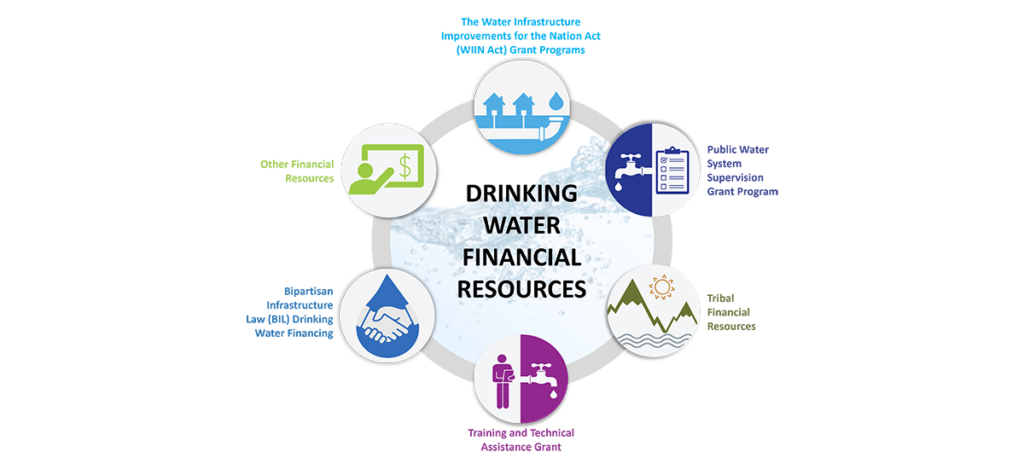
This program provides funding for clean and reliable drinking water systems, sanitary sewage disposal, sanitary solid waste disposal and storm water drainage to households and businesses in eligible rural areas.
Water quality programs from the State Revolving Fund to support landowners and communities.
The Iowa Drinking Water State Revolving Fund provides low-interest loans and financial assistance to public water systems for the design and construction of a variety of projects to ensure public health protection the provision of safe drinking water.
The Iowa Clean Water State Revolving Fund provides low-interest loans and financial assistance to eligible entities for the planning, design and construction of a variety of water quality improvement projects.
EPA provides a range of financial resources, including grants, made available to support public water systems with enhancing the quality of drinking water and improving public health. The Office of Water has a variety of funding programs available to public water systems.
A compilation of available funding resources and considerations for public agencies and communities looking to maintain or rehabilitate water and wastewater systems, while also considering conservation.
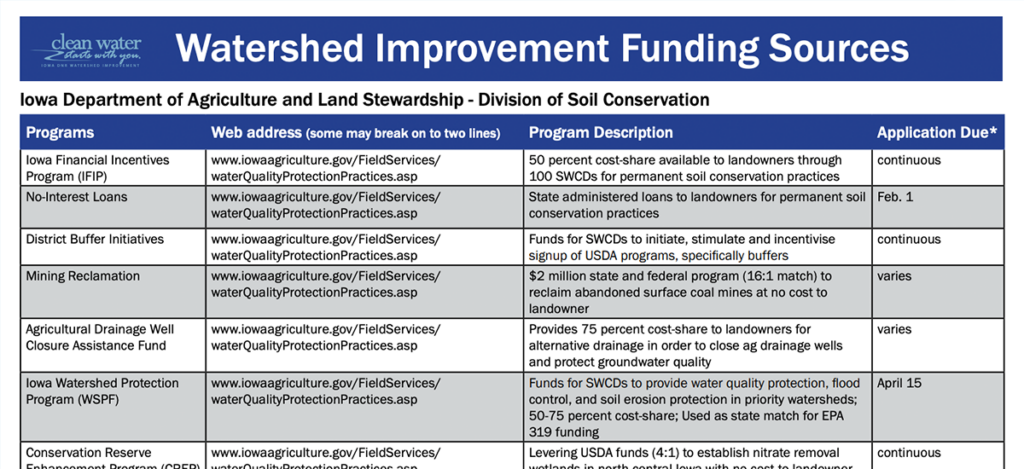
The Iowa Department of Natural Resources has compiled funding resources for watershed improvement across the state.
As part of the Water Uses Permit, Iowa Department of Natural Resources communities are required to adopt a water conservation plan to address their water needs and usage.
The State Revolving Fund provides Iowa communities with low-cost funds to invest in infrastructure that delivers safe drinking water and keeps waterways clean. Funding details and applications can be found here.
State funding opportunities for water, storm sewers and other infrastructure.
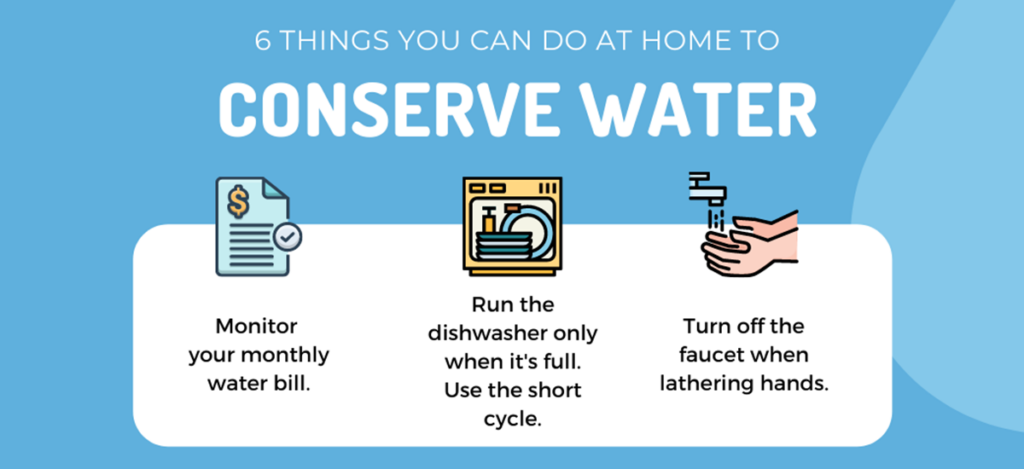
Using water efficiently will help ensure reliable water supplies today and for future generations. Here’s steps you can take towards water efficiency in your own home.
At any given time, INHF is working on 40 different protection, restoration and trail projects. Iowa Natural Heritage Foundation helped protect over 190,000 acres of Iowa prairies, woodlands, lakes and rivers and blazed the way for Iowa’s trails.
There are a number of easy ways to save water, and they all start with YOU. When you save water, you save money on your utility bills. Find tips vis Iowa Rural Water Association.
Your online resource for programs, forms, guidance and rules on private water supply wells in Iowa. Your local county environmental health office can help you arrange water testing or you can request a water sample test kit from a certified drinking water laboratory of your choice. The water is then sampled and sent to the laboratory for analysis.
American Rivers has many initiatives aimed towards cleaning water sources across the country. With the belief that clean water is the lifeblood of the environment and our communities, American Rivers looks to improve water quality by addressing some of the most important factors.
This program, ran by the University of Iowa's School for Planning and Public Affairs, creates mutually beneficial partnerships with Iowa communities to advance shared sustainability goals.
We support farmers, landowners and local partners working together to protect soil and reduce nutrient runoff to streams of the Upper Mississippi River Basin.
ICON is designed to reconnect Iowans with their river roots by activating more than 150 miles of waterways in Central Iowa.
Iowa has a diverse variety of aquatic environments ranging from deep natural lakes to shallow prairie marshes. With such vast ecosystems comes an array of wildlife that both thrive on these waterways and help protect them.
This program focuses on improving the aquatic communities, recreational benefits, and water quality throughout various Iowa Lakes.
The Iowa Watershed Approach compiles resources and aligns with other organizations in Iowa to reduce flooding and improve water quality.
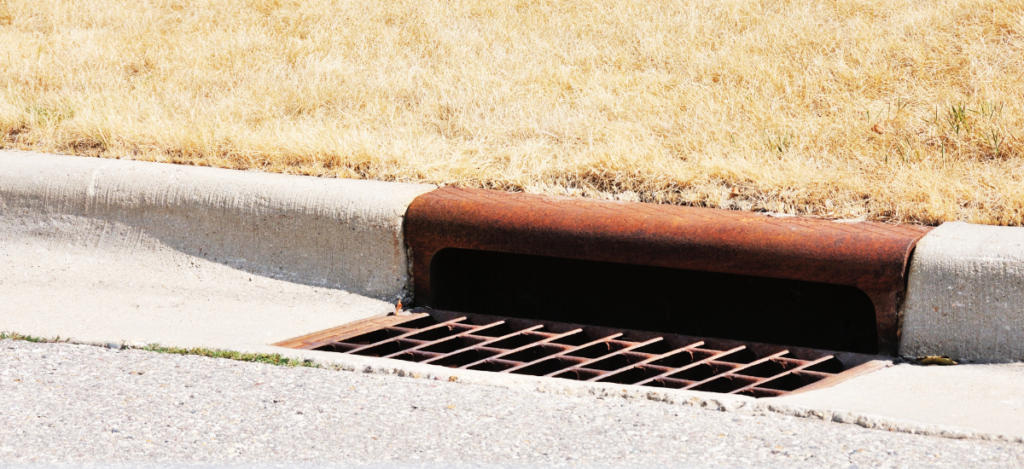
Stormwater runoff can be considered rainfall or snowmelt that drains through a storm sewer system that eventually enters another body of water like rivers, streams, creeks and lakes.
This partnership aims to continually advance soil health, reduce nutrient loss, and improve overall water quality. Conservation practices implemented through the MAWQP also provide benefits like diversified wildlife and pollinator habitats, reduced erosion, carbon sequestration, and increased recreational opportunities.
The 2022 Annual Report for the Iowa Water Quality Initiative details the nutrient reduction strategy in action statewide. This annual report outlines updates in funding, partnerships, and progress for Iowa water quality. It includes vital information from the Iowa Secretary of Agriculture, Mike Naig, as well as relevant data and reporting from across the state.
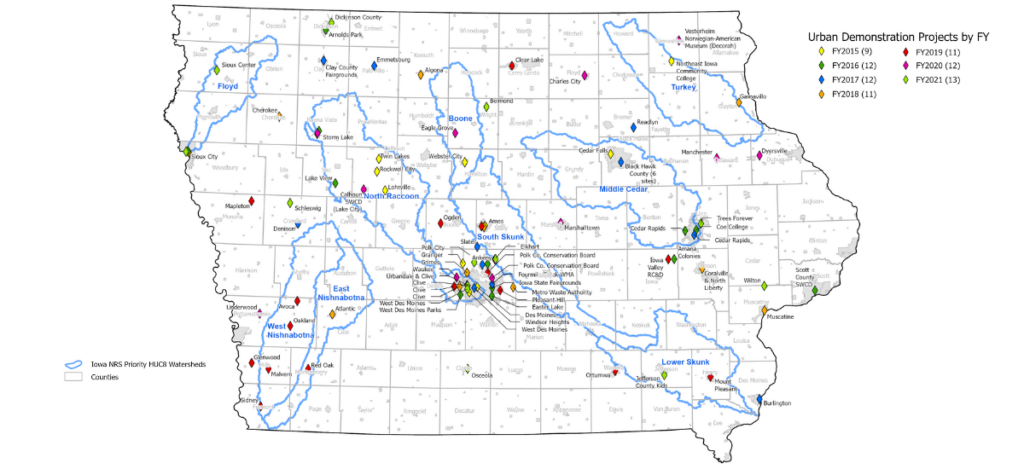
Clean Water Iowa supports Iowans working together to improve and protect Iowa water quality. They do so, in part, by supporting over 90 urban demonstration watershed projects. The 94 current projects span from park and neighborhood initiatives to lake and river restorations. These projects include various cities, counties, schools, and organizations all with a common goal in the conservation of Iowa water.
Beyond The Dirt is a podcast series focusing on various topics about soil health and water conservation. Spanning over 15 episodes, the hosts, Hunter and Neil, explore multiple programs, ideas and events pertaining to Iowa soil and water conservation efforts.
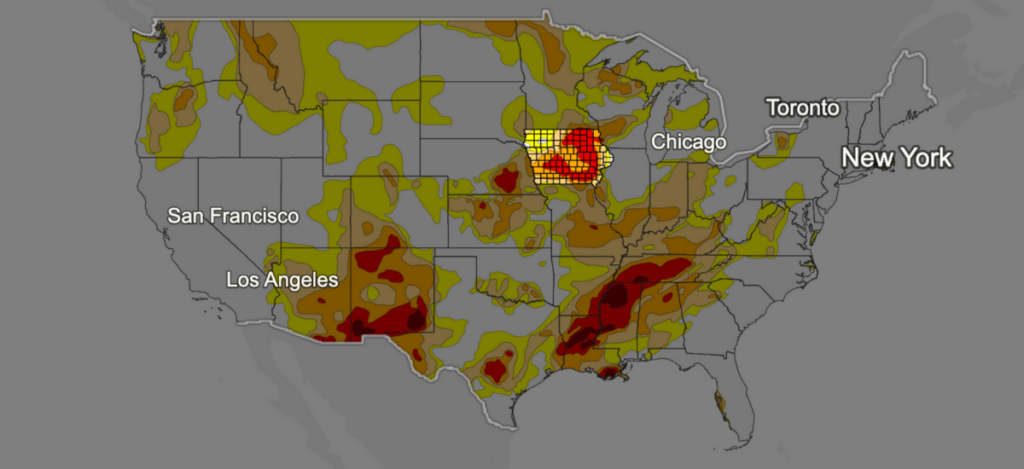
This map provides an accurate depiction of location and severity of drought. Depending on intensity, drought maps can be used as triggers for disaster declarations and loan eligibility with the United States Department of Agriculture.
Water Rocks is a youth education program in coordination with Iowa State University. Its goal is to foster knowledge, passion, and engagement in Iowa youth to help protect and transform our water resources. Through a combination of arts and STEM based activities and events, Water Rocks challenges and inspires Iowans to have a greater appreciation for all of Iowa water.
The main goal of The Conservation Infrastructure Initiative is to improve water quality while also creating jobs in the process. This initiative takes a 3-level approach where each category works towards developing solutions for respective key issues such as socio-economic value, technical knowledge, and educational opportunities.
The Iowa Flood Center brings innovative tools and reliable information to forefront for Iowans to help understand and prepare for floods. The IFC actively engages in flood-related projects to help Iowans mitigate flood risks and make more informed flood-related decisions.
The Rain Campaign shares and implements a variety of rainscaping best practices in Central Iowa. These practices are designed to help control flooding, mitigate soil erosion, and maintain water quality.
This multi-phase program allows The Iowa Watershed Approach to work with Watershed Management Authorities to prioritize projects that would improve flood impact and water quality across the state.
The goal of The Iowa Watershed Approach's Flood Resilience Program is to make sure that communities across the state have the best resources to reduce flood risk through mitigation, preparedness, response, and recovery.
This project involves connecting upstream and downstream partners to improve overall water quality of the North Raccoon Watershed through cover crops, no-till, bioreactors, saturated buffers, oxbow restorations, and constructed wetlands.
This project is designed to improve water quality for the surrounding area for both residents and wildlife. Through various partnerships and funding, the goal is improve drinking water, enhance wildlife habitats, and preserve land viability.
This approach is to bring innovative solutions to the most intensely drained land in the state. With goals of profitability and sustainability, the ISACD uses strategic funding and in-field practices to improve water quality, reduce flood risk, manage greenhouse gas emissions, and protect source water.
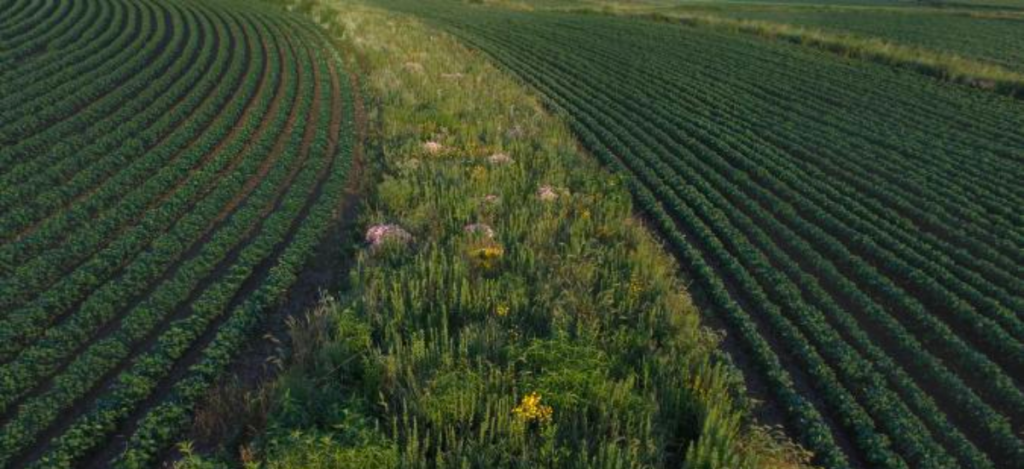
By incorporating prairie strips of native grasses and plants into strategic locations in fields, it offers a place for wildlife to live where they otherwise would not. Under the vegetation, deep and multilayer root systems help preserve ground water and soil stability which benefits the surrounding land.
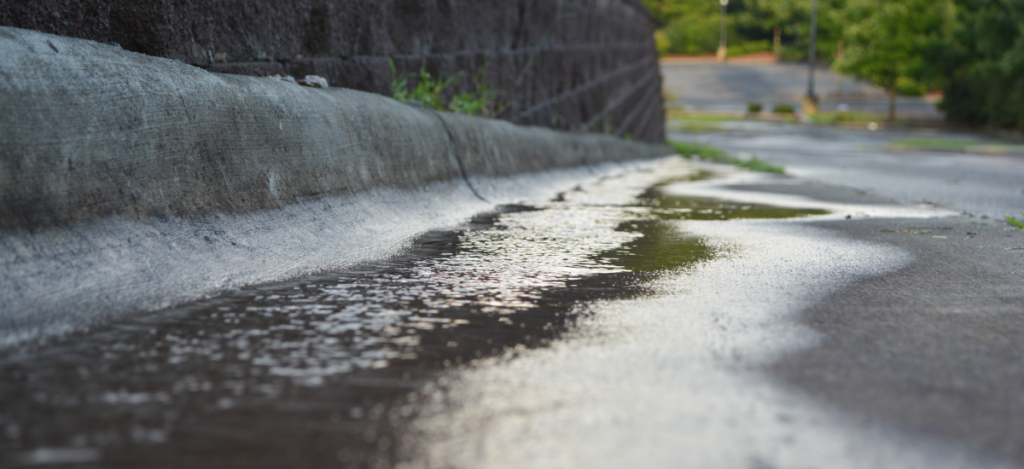
Waukee considers stormwater as precipitation from rainfall or snowmelt that flows across the ground, typically pavement like sidewalks, driveways, and roads. This means that the water is not absorbed into those surfaces and can cause drainage and flooding issues.
Iowa's Wildlife Action Plan is a multiphase, several year long project designed to protect and continue nature conservation. This includes a specific portion relevant to aquatic habitat and species, and how we can preserve the water they thrive in.
Iowa's Water & Land Legacy is dedicated to funding the Natural Resources and Outdoor Recreation Trust Fund. The goal of this fund is to ensure Iowans have access to clean water for healthy lifestyle choices.
Wetlands are a transitional landscape between dryland and waterways, and are important in maintaining the two. Wetlands are known to improve water quality, increase flood storage, provide wildlife habitat, and create recreational activities.
The 2023 Iowa Impact Report highlights conservation related efforts across the state. It addresses conservation successes, challenges that were overcome, and new challenges presented.
The priority of The Iowa Water Center's base funding is to support various project grants. Annually, the IWC Advisory Board accepts proposals that address the most critical water issues in Iowa.
Iowa water trails are specific corridors and routes for recreational use on various bodies of water throughout the state. There are resources in place to allow outdoor enthusiasts to plan their trip as far as access points, length of trail, and difficulty level.
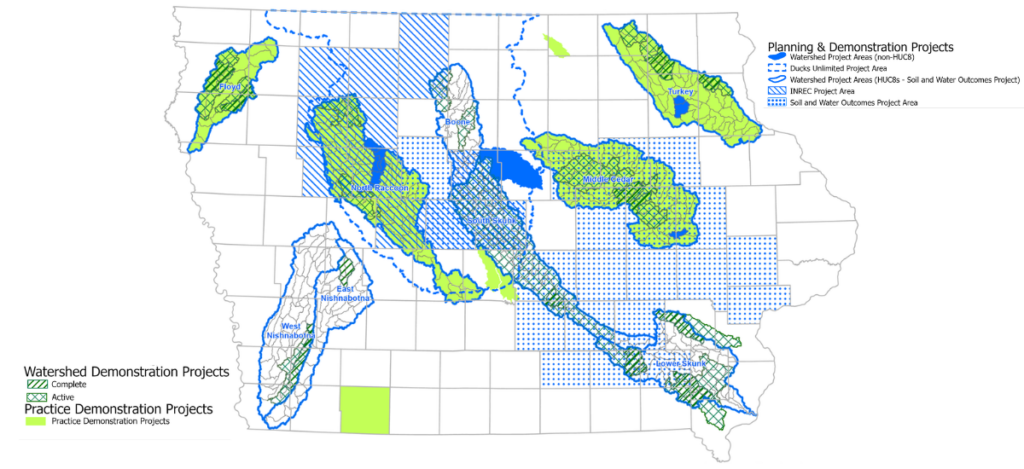
Clean Water Iowa supports Iowans working together to improve and protect Iowa water quality. They do so, in part, by supporting over 20 rural demonstration watershed projects. The 14 current projects as well as the 7 practice projects set the stage for landowners to implement conservation practices.
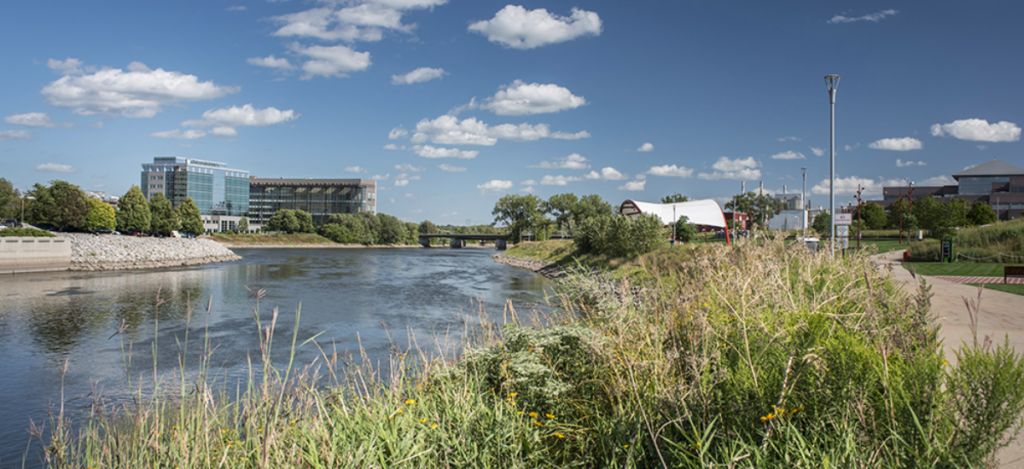
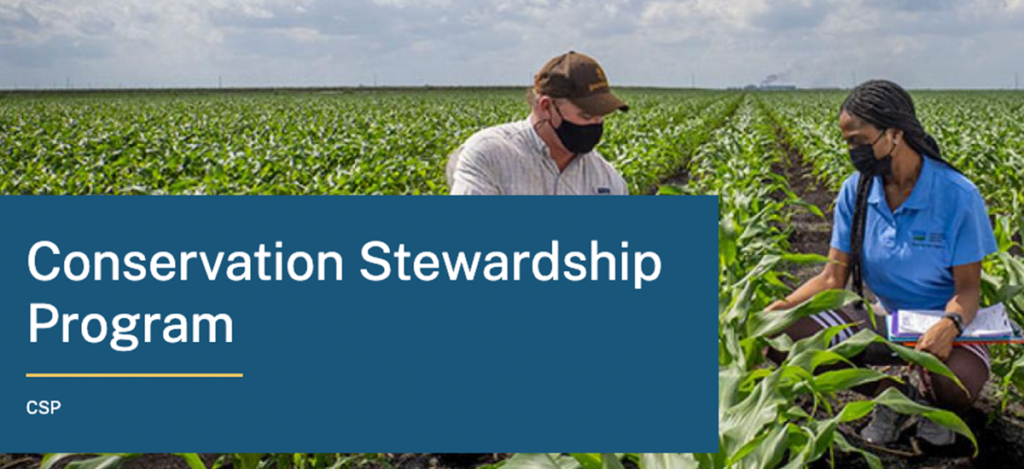
The Conservation Stewardship Program helps you build on your existing conservation efforts while strengthening your operation. 
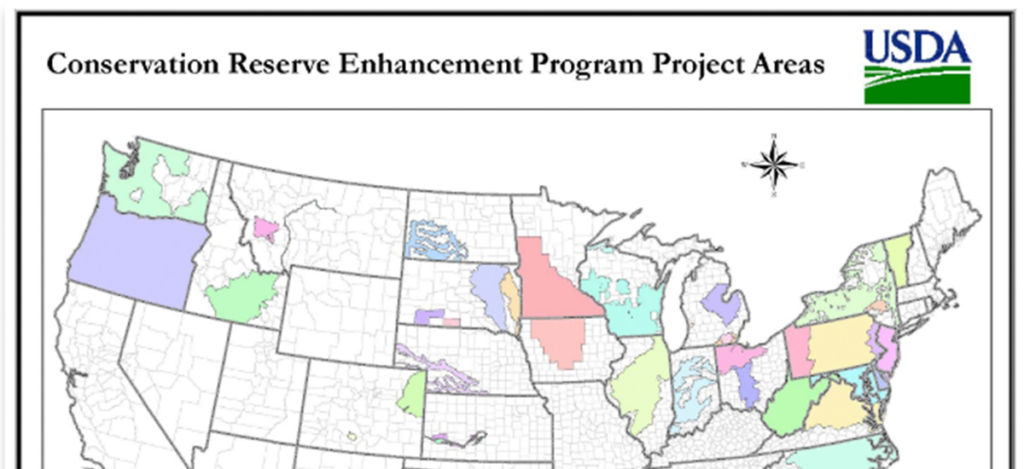
CREP empowers farmers and ranchers to re-establish valuable land cover to help improve water quality, prevent soil erosion, reduce loss of wildlife habitat and address other sustainability objectives.
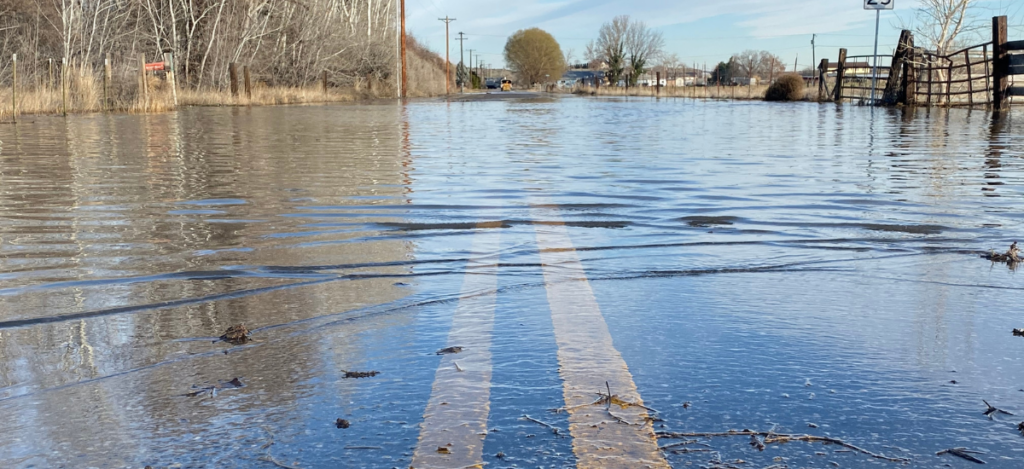
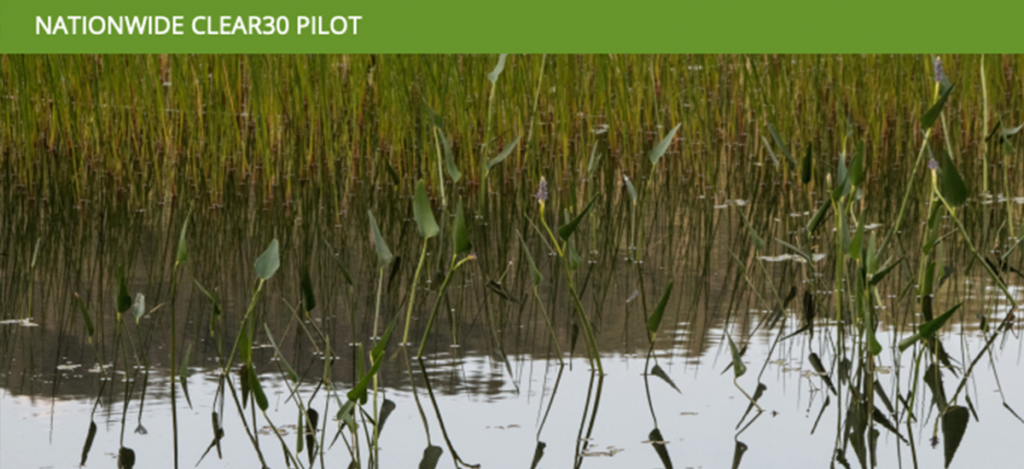
The Clean Lakes, Estuaries, And Rivers initiative offers 30-year contracts through its CLEAR30 pilot. FSA introduced this pilot in 2020, originally focused on 12 states in the Great Lakes and Chesapeake Bay watershed. CLEAR30 is now available nationwide.
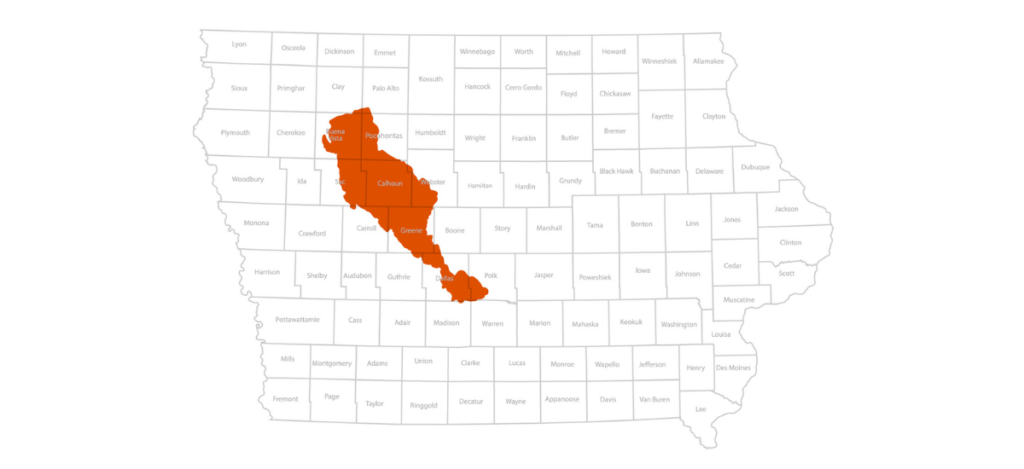
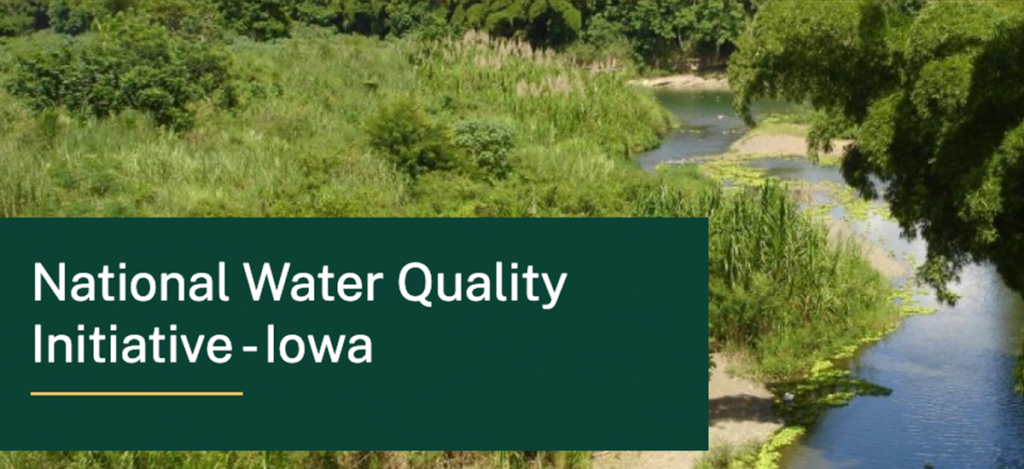
As USDA’s premiere water quality initiative, National Water Quality Initiative provides a way to accelerate voluntary, on-farm conservation investments and focused water quality monitoring and assessment resources where they can deliver the greatest benefits for clean water.
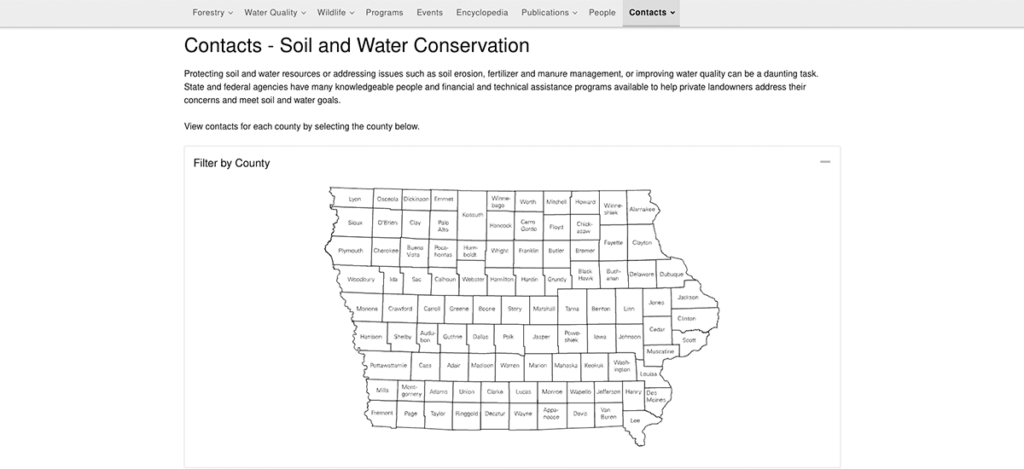
Protecting soil and water resources or addressing issues such as soil erosion, fertilizer and manure management, or improving water quality can be a daunting task. State and federal agencies have many knowledgeable people and financial and technical assistance programs available to help private landowners address their concerns and meet soil and water goals.
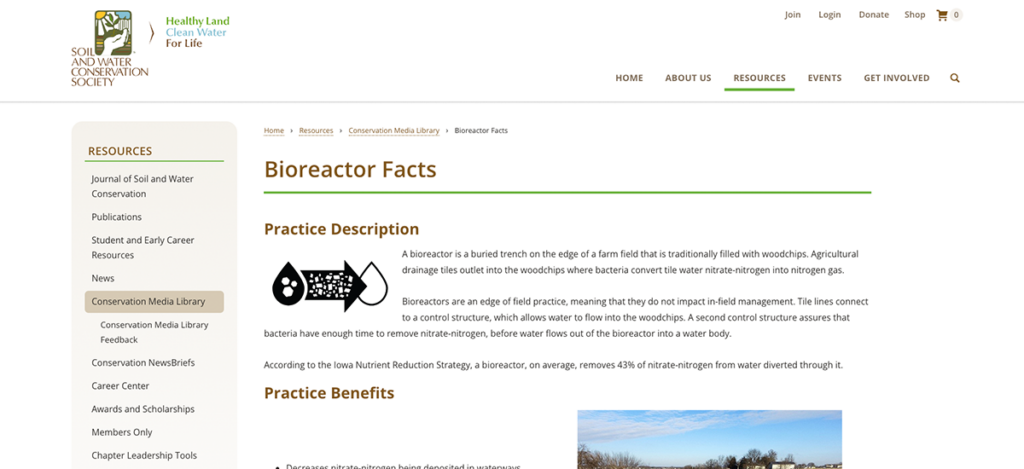
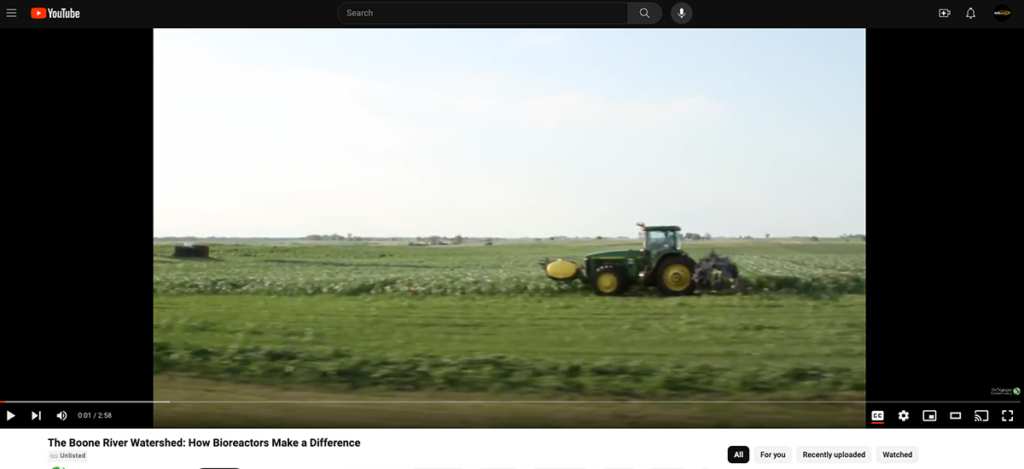
A bioreactor is a buried trench on the edge of a farm field that is traditionally filled with woodchips. Agricultural drainage tiles outlet into the woodchips where bacteria convert tile water nitrate-nitrogen into nitrogen gas.
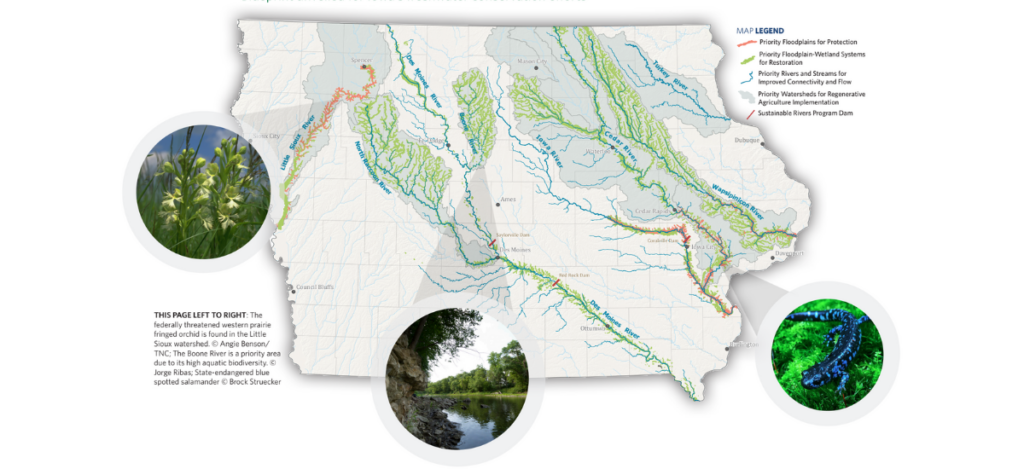
Farmers are stewards of the land, and in Iowa's Boone River watershed, they're working with The Nature Conservancy to improve water quality and wildlife habitat, while maintaining productive yields.
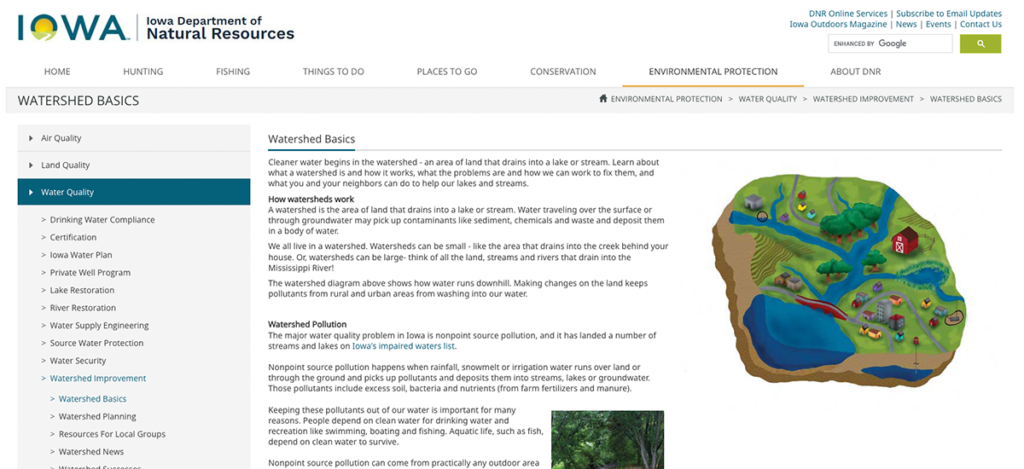
Learn about what a watershed is and how it works, what the problems are and how we can work to fix them and what you and your neighbors can do to help our lakes and streams.
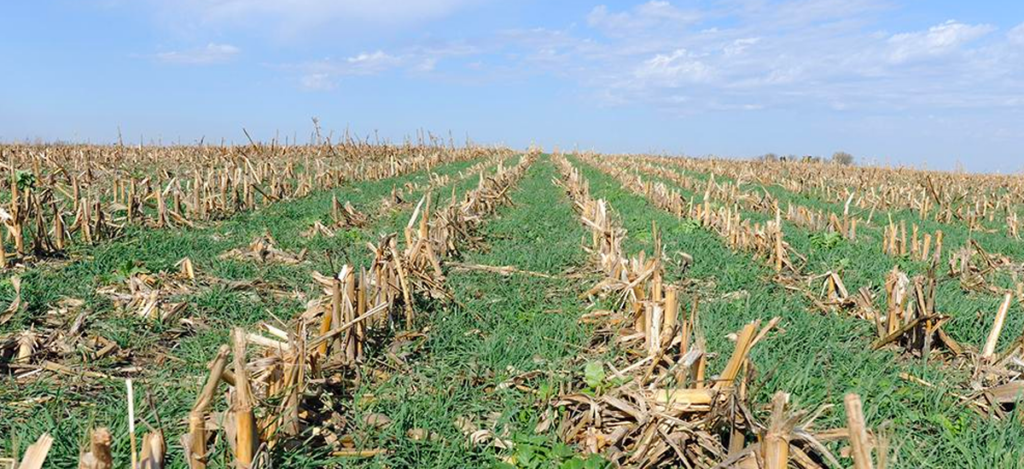
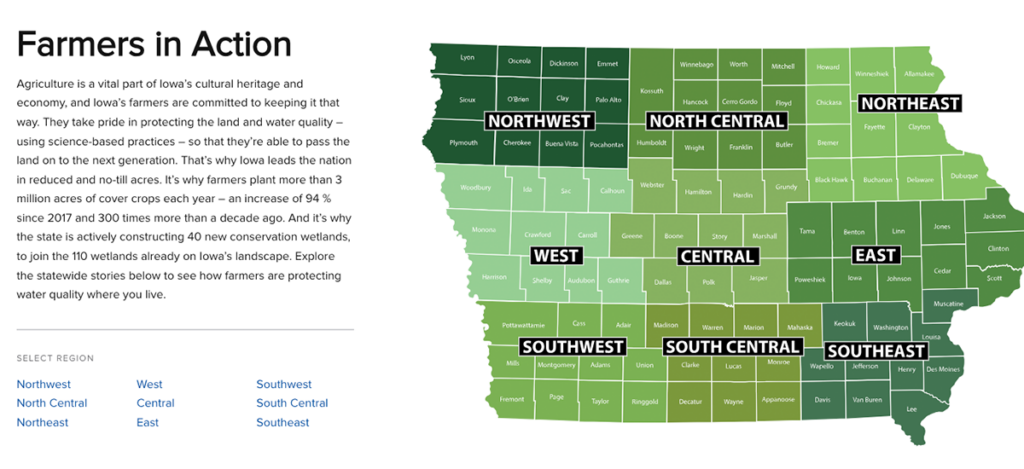
Farmers are taking a collaborative, comprehensive approach to improving water quality by adopting research-based conservation practices that best fit their farms.
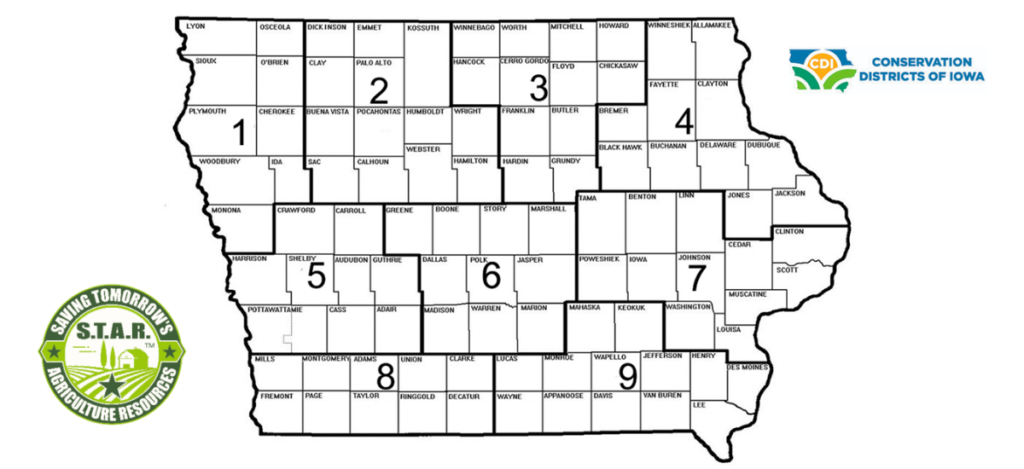
The Conservation Districts of Iowa started the Saving Tomorrow's Agriculture Resources project to keep farmers up to date on their own conservation status and needs. This program evaluates land to help manage soil and nutrient requirements.
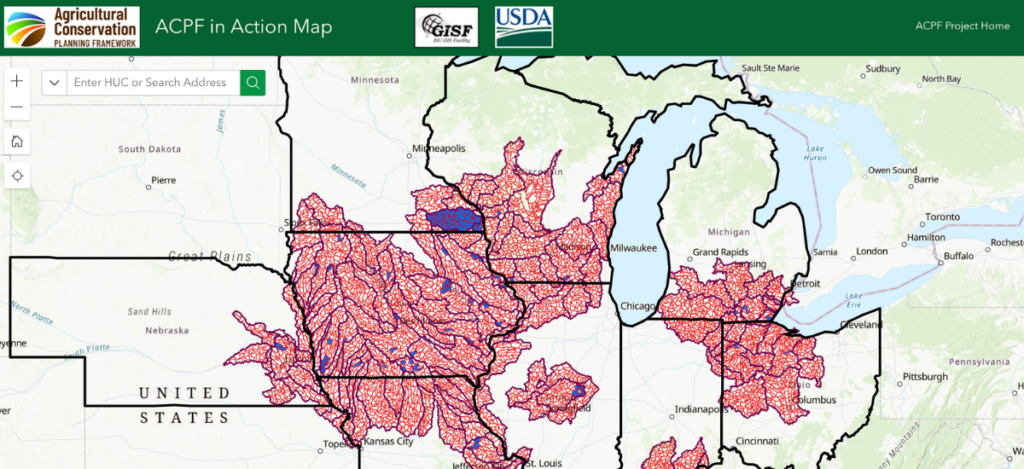
The Agricultural Conservation Planning Framework is a free resource to address conservation needs. Made to help local farming communities, leveraging this is high-resolution, geo-spatial system can help improve soil and water conservation efforts.
Find out more about Conservation Reserve Enhancement Programs in your area.